Austria uses Type C and F outlets with 230V electricity. U.S. travelers will need a plug adapter and may need a voltage converter for certain devices.
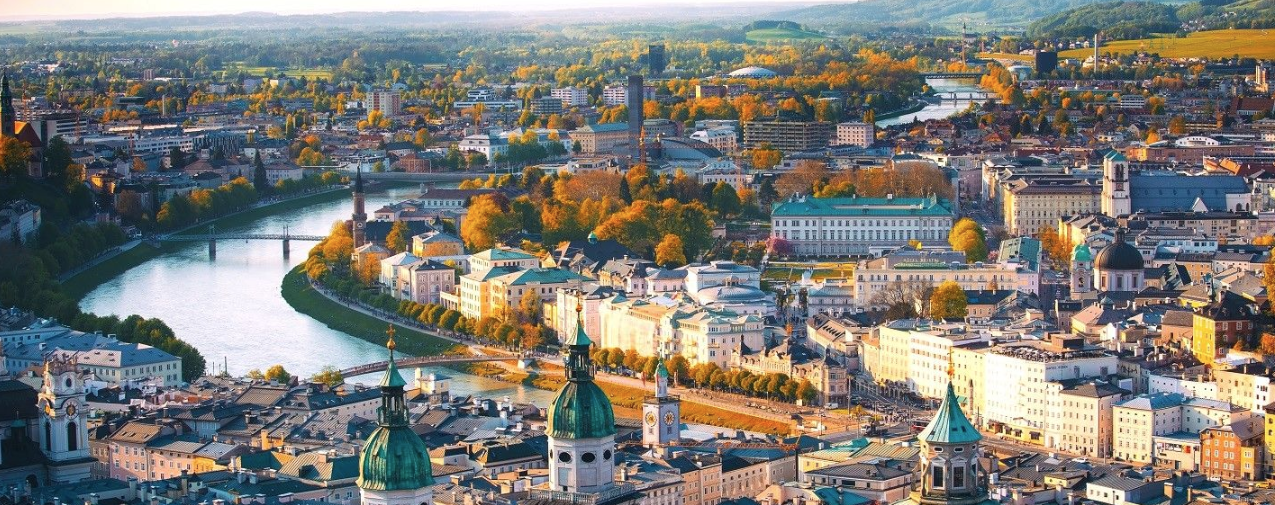
Austria
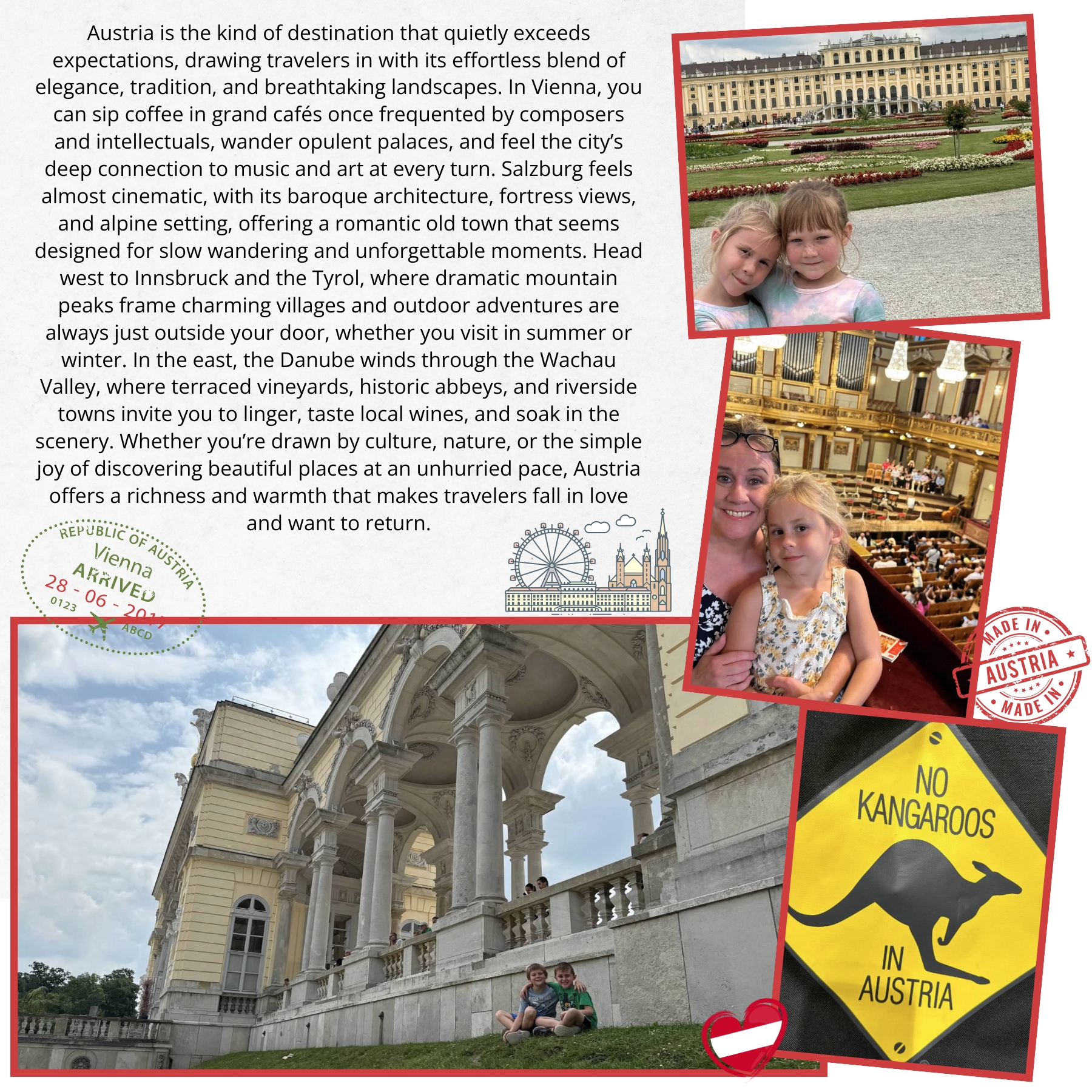
Travelers Cheat Sheet
- Language: German; English is widely spoken
- Currency: Euro €
- Best Time to Travel: April-June or September-October
- Time Zone: Central European Time (CET)
- International Airport: Vienna International Airport (VIE), Salzburg Airport (SZG), Innsbruck Airport (INN)
- Popular Cities: Vienna, Salzburg, Innsbruck, Hallstatt, Graz
- Transportation: Public Transportation, and rental Cars
- Entry Requirements: Valid Passport, and in late 2026, US passengers will need to apply for European Travel Information and Authorization System (ETIAS) before entering.
Know Before You Go

Tipping
Tipping is customary but modest in Austria. Rounding up the bill or adding 5–10% for good service is standard in restaurants and cafés.
Understanding Culture
Austrians value punctuality, politeness, and order. Greetings are important, and respectful behavior is expected in public spaces, especially in churches and historic sites.
Plugs and Power
Water
Tap water in Austria is safe to drink and often sourced from the Alps. Bringing a reusable water bottle is encouraged.

Public Restrooms
Public restrooms are available but often require a small fee. In cafés and restaurants, it’s customary to make a small purchase before using the restroom.
Planning Ahead
Public restrooms are available but often require a small fee. In cafés and restaurants, it’s customary to make a small purchase before using the restroom.

Entry Requirements
U.S. travelers do not need a visa for tourist stays of up to 90 days within a 180-day period in Austria and the Schengen Area. Your passport must be valid for at least three months beyond your planned departure date. Proof of onward travel and sufficient funds may be requested. ETIAS is not currently required and is expected to begin no earlier than late 2026.
Traveling to and from Austria
Austria is easy to reach by air, train, or car. Major international airports include Vienna (VIE), Salzburg (SZG), and Innsbruck (INN). Many travelers also arrive via train from neighboring countries such as Germany, Italy, Switzerland, and the Czech Republic, with no border checks within the Schengen Zone.
Austria is centrally located in Europe, making it ideal for multi-country trips. High-speed and regional trains connect Austria seamlessly to Germany, Italy, Switzerland, Hungary, and beyond. Renting a car is useful for rural or alpine areas, while trains are the most efficient option for city-to-city and cross-border travel.

What to Wear
Dress comfortably but neatly in cities. Comfortable walking shoes are essential. In alpine regions, layers are important year-round due to changing weather. Modest clothing is required when visiting churches.
Money & Shopping
Austria uses the Euro (€). Credit cards are widely accepted, but some smaller businesses prefer cash. Most shops are closed on Sundays, except at train stations and in tourist areas.

Language
German is the official language. English is widely spoken in cities and tourist areas, but learning a few basic German phrases is appreciated.
Connectivity and SIM Cards
Wi-Fi is widely available in hotels, cafés, and public spaces. Travelers may benefit from an eSIM or international data plan for consistent connectivity, especially when navigating transit.

Transportation
Austria has an excellent public transportation system. Trains are efficient for city-to-city travel, and buses and cable cars serve alpine regions. Driving is useful for rural areas but not necessary in cities.
If renting a car, travelers must purchase a vignette (toll sticker) to use Austrian highways. Speed cameras are common and strictly enforced.