Scotland uses Type G outlets with 230V electricity. A universal power adapter is recommended. Most modern devices are dual-voltage, but appliances like hair tools should be checked.

Scotland
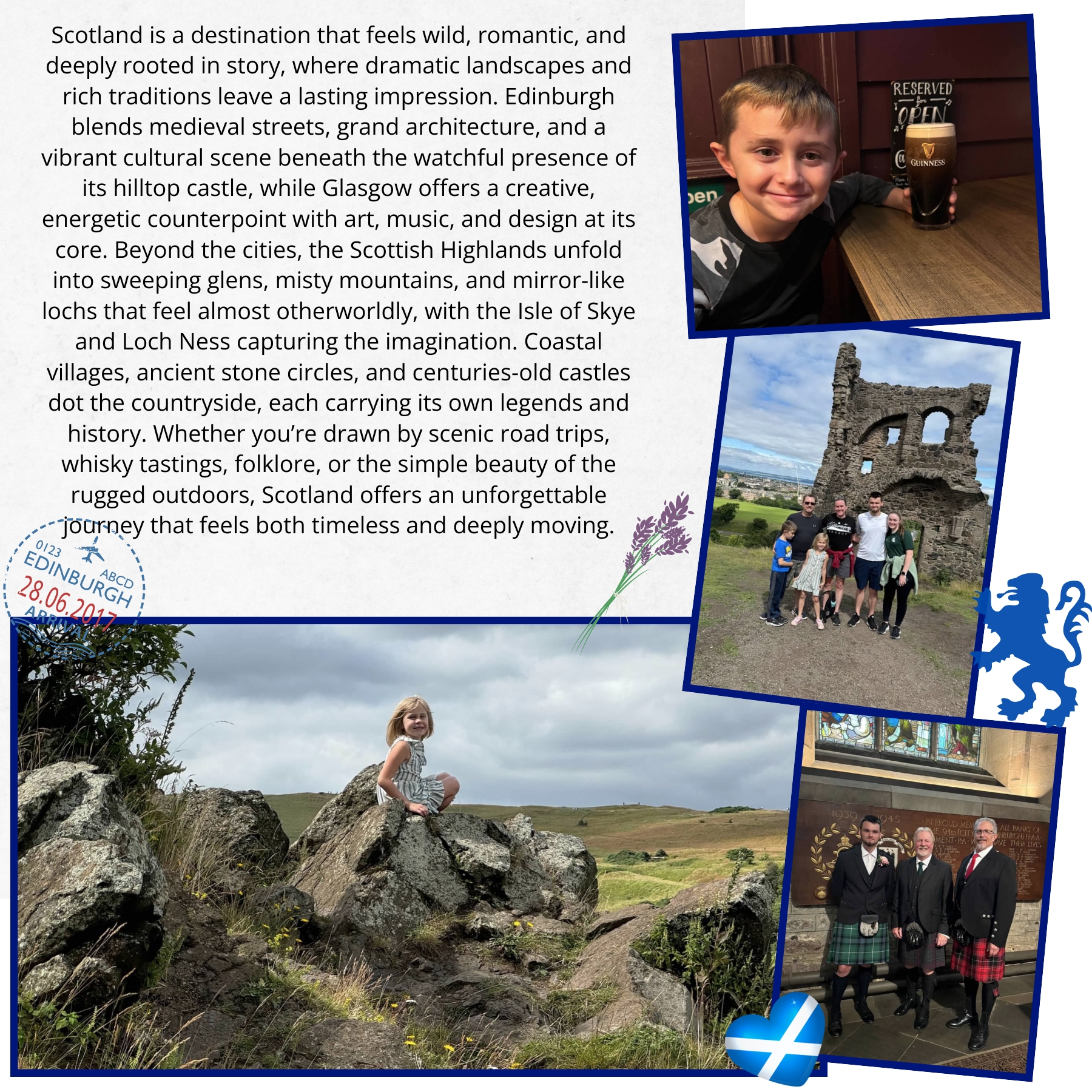
Travelers Cheat Sheet
- Language: English and Scottish Gaelic
- Currency:British Pound Sterling (£)
- Best Time to Travel: May-September
- Time Zone: Greenwich Mean Time (GMT)
- International Airport: Edinburgh Airport (EDI), Glasgow International Airport (GLA), Aberdeen (ABZ) and Inverness (INV),
- Popular Cities: Edinburgh, Glasgow, Inverness, Aberdeen, Isle of Skye, Highlands, St Andrews
- Transportation: Trains, Buses, Rental Cars
- Entry Requirements: Valid passport, and US travelers will need an Electronic Travel Authorization (ETA) prior to arrival.
Know Before You Go

Tipping
Tipping in Scotland is appreciated but not required. A tip of 10–15% in restaurants is common for good service, and rounding up taxi fares or leaving a small amount for hotel staff is customary.
Culture
Scotland has a friendly, polite culture that values manners and respect. Greetings like “hello” or “good day” are appreciated, and queuing and orderly behavior in public spaces is expected. Scottish heritage and traditions, including Highland culture and clan history, are highly valued.

Plugs and Power
Water
Tap water is safe to drink throughout Scotland. A reusable water bottle is handy for sightseeing and hikes.
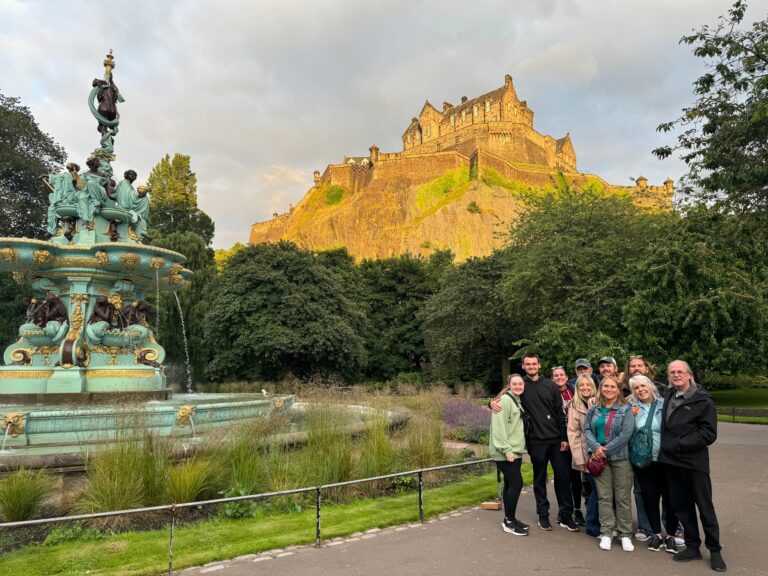
Public Restrooms
Public restrooms are available but may require a small fee. Many are located in visitor centers, train stations, and cafés, so planning restroom breaks around meals is advisable.
Planning Ahead
Popular sites like Edinburgh Castle, Loch Ness, and the Isle of Skye can get busy. Booking accommodations, tours, and transportation in advance is recommended, especially during peak summer months.

Entry Requirements
U.S. travelers can enter Scotland visa-free for stays up to six months. Passports must be valid for the duration of the visit. An Electronic Travel Authorization (ETA) will be required from 2025. Scotland is part of the UK, making travel to England, Wales, and Northern Ireland straightforward. Flights and trains also connect to Europe for onward travel.
Travel to and from Scotland
Scotland is easily accessible via major international airports including Edinburgh (EDI), Glasgow (GLA), and Aberdeen (ABZ). These airports offer connections across Europe, North America, and beyond, with efficient links to city centers via trains, buses, and taxis.
Getting around Scotland is straightforward with its extensive transportation network. Trains connect major cities such as Edinburgh, Glasgow, and Aberdeen, and scenic rail routes are ideal for highland travel. Buses and coaches provide connections to smaller towns and rural areas. Urban transit systems, such as the Glasgow Subway and local buses, make navigating cities convenient. Renting a car is recommended for exploring remote regions, lochs, and castles, though travelers should be comfortable driving on the left-hand side.
Scotland also serves as a hub for travel throughout the UK and Europe. Train connections allow easy access to England, Wales, and Northern Ireland, while flights from major airports connect to Europe and worldwide destinations. Day trips from Edinburgh or Glasgow are easy to plan using trains, coaches, or rental vehicles, making it simple to explore Scotland’s cities, countryside, and iconic landmarks efficiently.
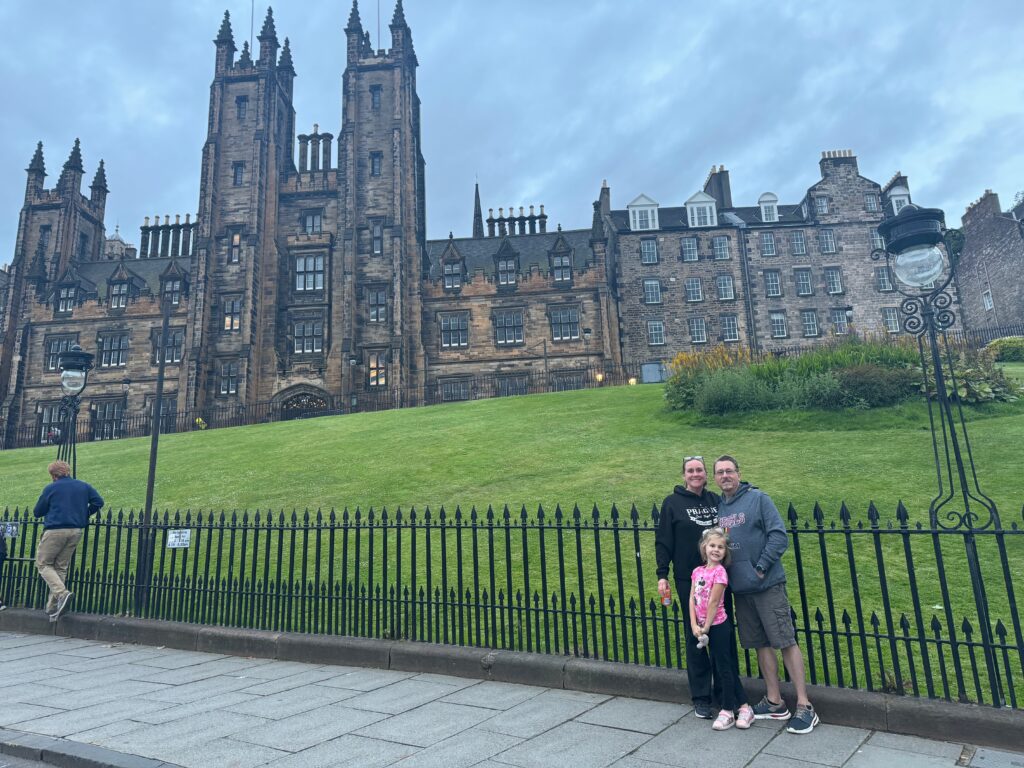
What to Wear
Layers are essential, as Scottish weather can change quickly. Waterproof jackets and comfortable walking shoes are a must, especially for exploring cities, lochs, and highlands. Modest attire is recommended for religious sites.
Money & Shopping
Scotland uses the British Pound Sterling (£). Credit and debit cards are widely accepted, but cash is helpful for smaller towns, markets, and rural areas. Always pay in pounds to avoid poor exchange rates. Many shops close on Sundays or have reduced hours, though major cities and tourist centers usually stay open.
Language
English is the primary language, with Scottish Gaelic spoken in some regions. Basic English phrases are sufficient, though learning a few Gaelic words can enhance cultural experiences.
Connectivity and SIM Cards
Wi-Fi is widely available in hotels, cafés, and urban areas, but coverage can be limited in rural or highland regions. An eSIM or international data plan is recommended for navigation and booking while traveling.

Transportation
Scotland’s transportation includes trains, buses, and domestic flights connecting major cities like Edinburgh, Glasgow, and Aberdeen. Trains provide scenic routes, especially for highland travel. Urban areas have local buses and subway systems (like the Glasgow Subway). Renting a car is ideal for exploring rural areas, lochs, and castles. Driving is on the left-hand side of the road.